Most lighting upgrades go wrong at the start, not the end. Fixtures get chosen from a catalog before anyone has decided what the rooms need, and the result is a house with new lights and the same problems. The sequence below is the one we follow on a residential project. It is not long, but the order matters, and the first three steps are the ones people skip.
1. Walk the house at night with a light meter
Do this after dark, with the lights as the household normally uses them, and take a light meter or a phone app that reads in footcandles. Measure at the places where things happen: the kitchen counter, the reading chair, the bathroom mirror, the desk, the stair. Write the numbers on a plan. Then note what is wrong in words: the counter is dark because the downlight is behind me, the hallway is a runway of bright dots, the living room is either blinding or off.
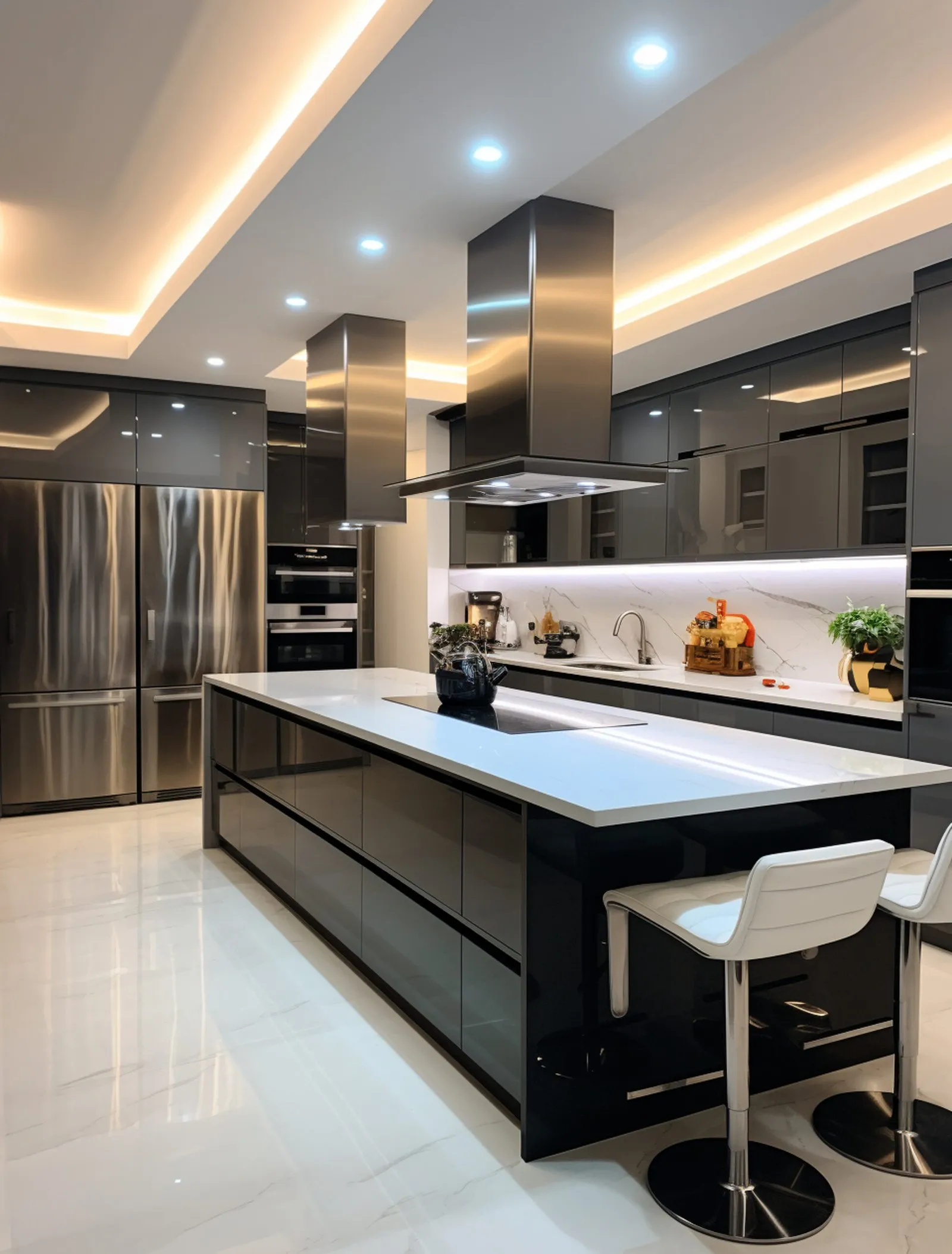
The numbers will surprise you. Most kitchens measure 15 footcandles on the counter where 30 to 50 is wanted, and most living rooms measure 25 on the floor where 8 would be more comfortable. The two problems are usually in the same house: too little light where it is needed and too much where it is not.
2. Decide what the upgrade is for
There are four common reasons, and they lead to different work. Fixing bad light in specific rooms is a task-lighting job. Making the house feel better in the evening is a layering and dimming job. Cutting the electricity bill is a source-replacement job. Getting rid of an ugly ceiling is an aperture and trim job. Most projects are two of these. Write down which two, because the budget goes to different places for each.
3. Think in layers, room by room
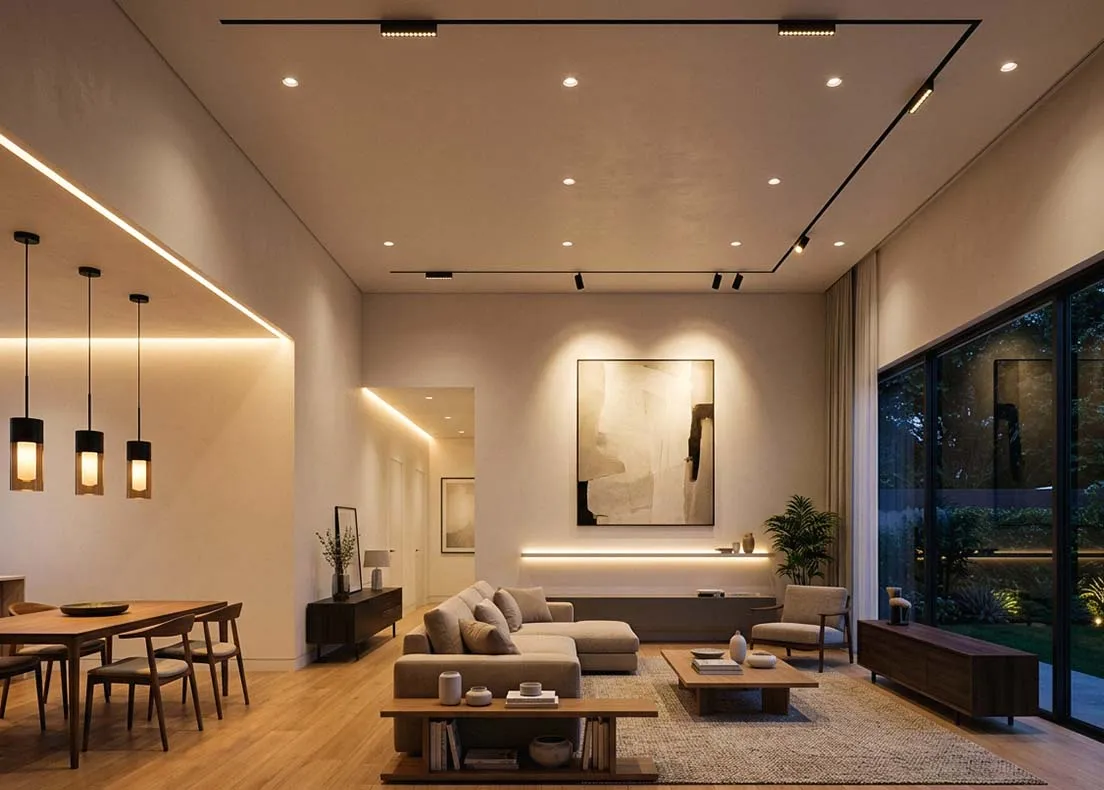
Every room gets three layers, considered separately. General light to move around and see faces, which in a living space should be low, 5 to 15 footcandles. Task light on the surfaces where hands or eyes work, 30 to 50. Accent light on the two or three things worth looking at, at three to five times the general level around them. Mark each layer on the plan for each room. A room that only has the first layer is the room everyone calls flat.
4. Choose fixtures by layer, then by room
Now the catalog. General layer: small-aperture recessed downlights with a wide beam, or a surface cylinder where the ceiling cannot be cut. Task layer: downlights placed over the front edge of the counter or desk, LED strip in a profile under cabinets, a spot over the reading chair. Accent layer: adjustable downlights or spots aimed at the art and the fireplace, strip along the shelves, a cove if the ceiling detail allows.
Then the three numbers that apply to every fixture. Color temperature: 2700K in living spaces and bedrooms, 3000K in kitchens and bathrooms, and one per sightline. Color rendering: 90 CRI minimum, 95 or better where there is timber, stone, fabric or skin. Beam: narrow for accents, wide for general. Decorative pieces, a pendant over the table or sconces at the mirror, are chosen last and for their looks, with the working light provided by the layers behind them.
5. Draw the layout
On a plan of each room, place the general fixtures first, 2 to 3 feet off the walls and spaced by the beam and ceiling height, roughly 5 to 6 feet apart on a 9 foot ceiling for a wide beam. Then the task fixtures over the work, ignoring the grid. Then the accents, positioned by aiming geometry, about 30 degrees off vertical for anything on a wall. Give every fixture a label and a circuit number, and give each layer its own circuit. Check the plan against the joists, ducts and anything else in the ceiling before it is final.
6. Decide the control before the driver is ordered
Every layer on its own dimmer is the minimum, and it is the cheapest decision in the project to make now and the dearest to make later. Beyond that, decide whether the house wants scenes: a day, evening and late setting recalled from one button. If it does, choose the system, a wired control system speaking 0-10V or DALI-2, or a wireless one on Casambi, and specify the drivers to match. If it does not, TRIAC drivers behind good LED-rated wall dimmers do the job. Flicker and a poor low end almost always come from a driver and a dimmer that were bought separately.
Where the evening matters, a dim to warm engine that drifts from 3000K to 1800K as it dims puts the whole evening scene on one dimmer without a second set of fixtures.
7. Bring in the electrician at the right moment
Replacing a fixture on an existing box is within most people's competence. New circuits, new recessed housings, anything in an insulated ceiling, and anything involving a control system are electrician's work, and in most jurisdictions a permit. The moment to involve them is when the layout is drawn and the circuiting is decided, not before; an electrician asked to quote from a rough idea will quote for the rough idea. Give them the reflected ceiling plan with the fixture schedule, and confirm IC rated housings wherever the fixtures meet insulation.
8. Commission it at night
The layout is not finished when the fixtures are in. It is finished when they are aimed. Go back after dark, with the meter, and aim every adjustable fixture at the thing it was placed for: the painting, the stone, the chair. Set the scenes on the dimmers at the levels the layout was designed to, and walk each room at each scene. Check the counter reads 30 to 50, the living room floor reads under 15 in the evening, and nothing in the eye line is a bright source. This visit takes an hour and it is the difference between a scheme that works and a scheme that was installed.
9. Keep it working
There is not much to do. Wipe the trims and the cove diffusers once a year, since dust on a diffuser is the commonest reason a cove goes dim. Keep the driver and dimmer models on file with the plan, so a replacement years later matches. And if a control system is installed, save its scene settings somewhere other than the system itself.
What this avoids
- Buying fixtures before the rooms have been measured
- A ceiling grid that lights the floor and misses the counter
- Mixed color temperatures across an open plan
- One circuit per room, so nothing can be dimmed independently
- Drivers that flicker because the dimmer was an afterthought
- Adjustable fixtures that were never aimed
This is the sequence our lighting design service runs on a plan: measure, decide the layers, choose the fixtures, draw the layout with calculated light levels, specify the control, and issue the schedule to the electrician. Send us the plans and the notes from the night walk, and we will take it from step three.
Planning a project? Our lighting design service turns plans into a photometric plan, fixture schedule, and final aim. Start with a design brief.