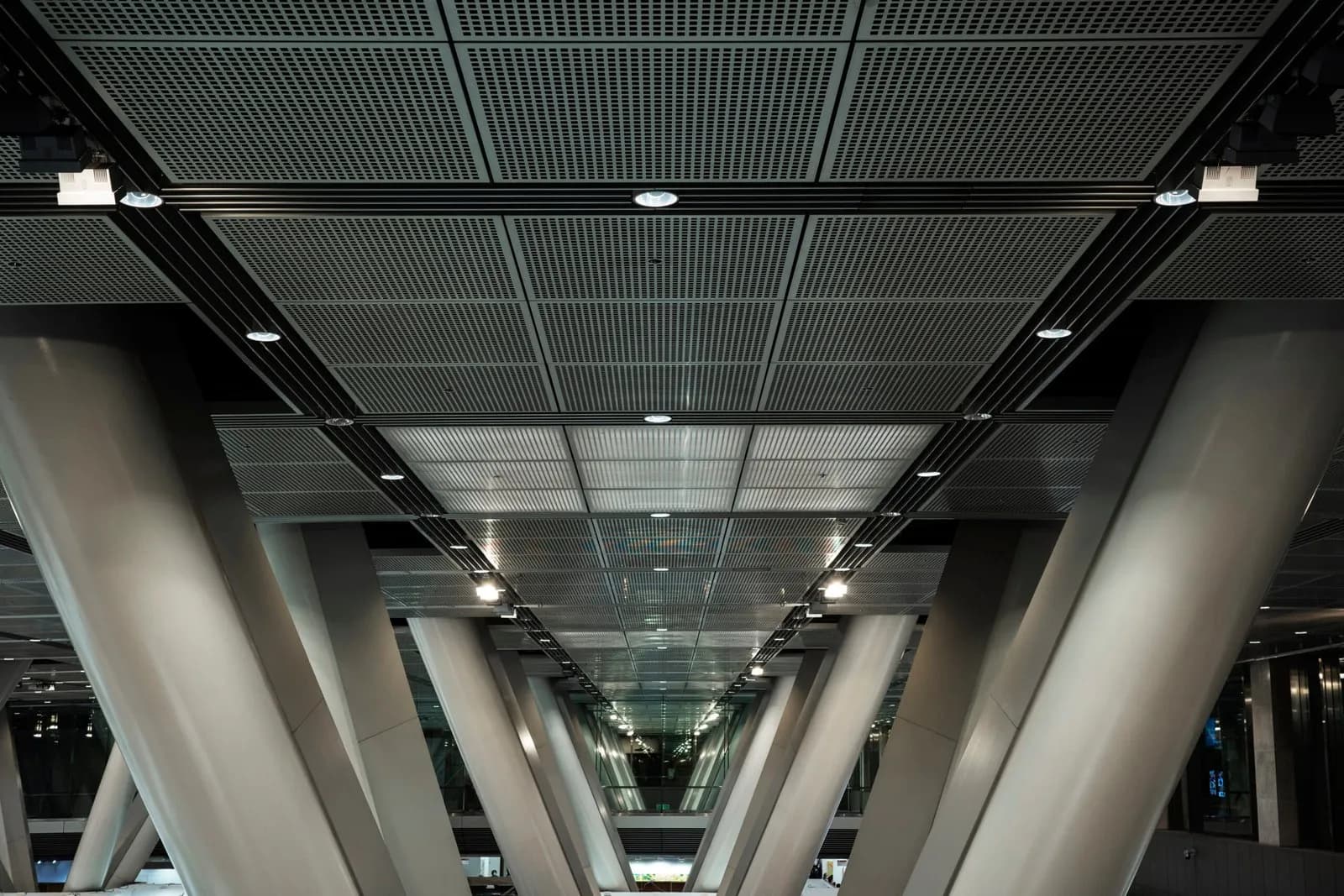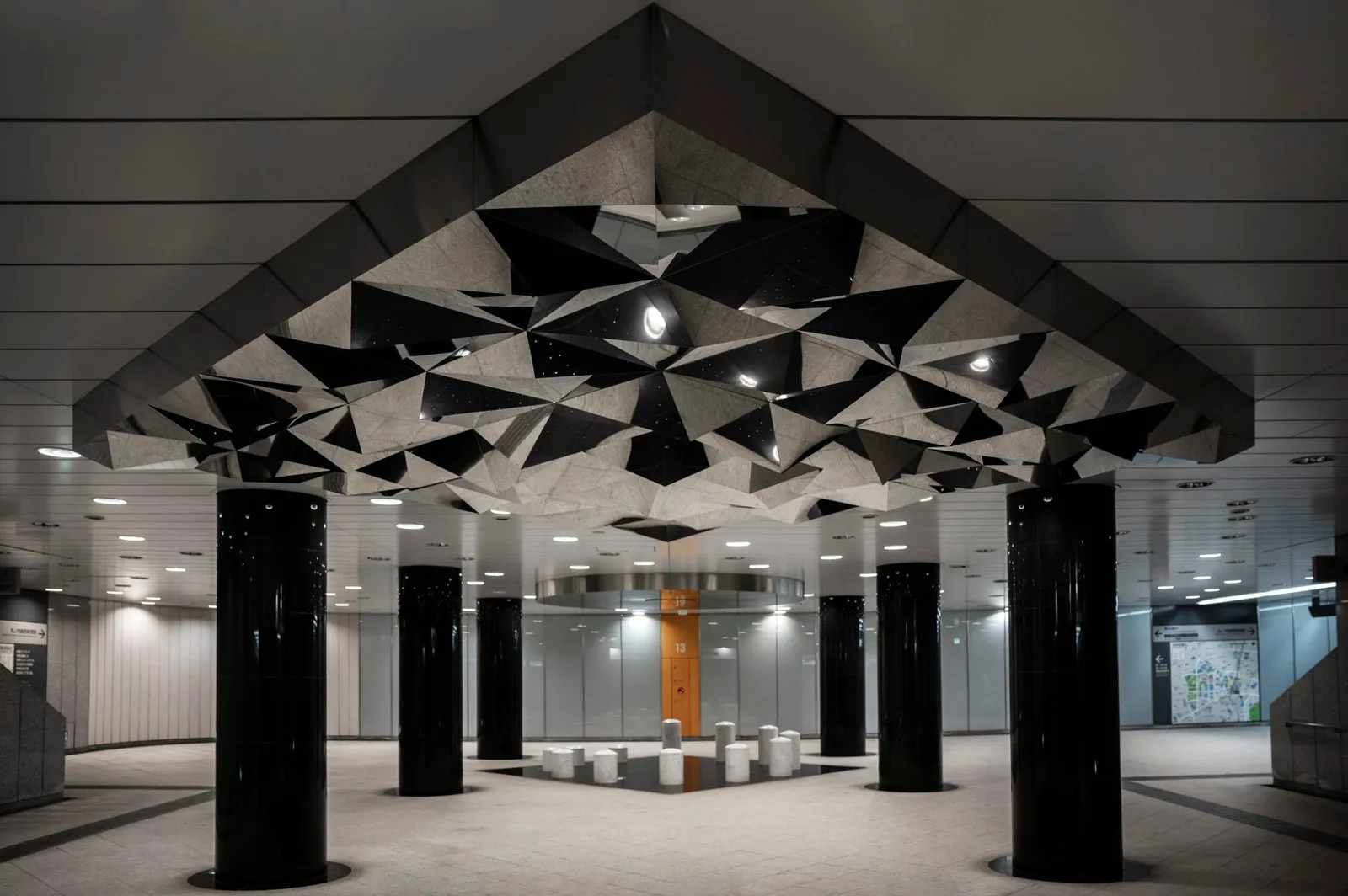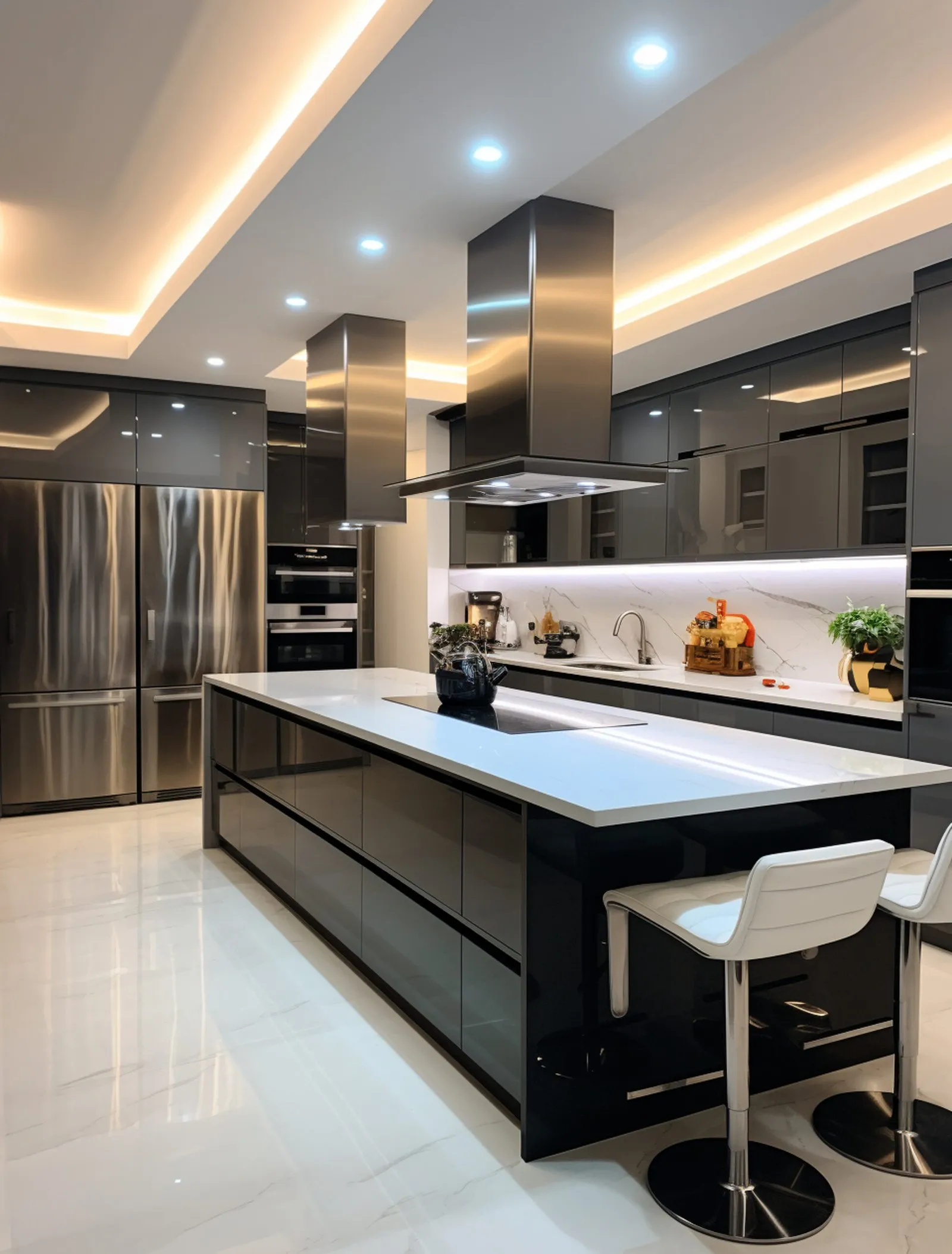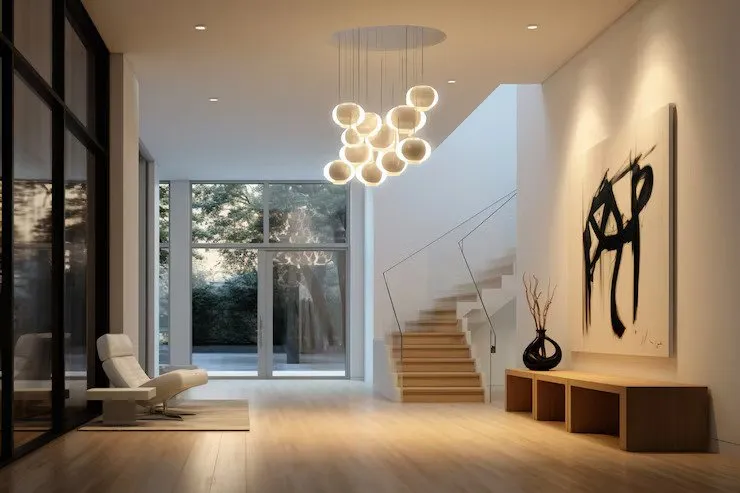
The square or round question comes up on almost every residential schedule, and the honest answer is that it rarely affects the light. A square and a round downlight of the same aperture from the same family carry the same chip, the same reflector and the same beam. What changes is the ceiling: how the aperture reads, how hard it is to install straight, and what happens when the fixture is tilted. Those are the things to decide on.
The optics are identical, so stop worrying about them
Our 3 inch downlight comes as either shape on the same cutout, with the same 15 watt chip, the same beam options from 15 to 80 degrees, and the same trim choices. The light on the floor is a circle in both cases, because the beam is set by the reflector behind the trim, not by the shape of the hole. Nothing about lumens, color temperature, CRI or dimming changes with the shape. If a spec sheet suggests otherwise, it is comparing two different fixtures rather than two shapes of one.
What a square aperture does to a ceiling
A square has edges, and edges have a direction. Every square downlight in a room has to be parallel to the walls and to each other, and the eye is unforgiving about it. A rotation of two degrees on one fixture in a run of six reads instantly, in a way that a round fixture never can. That is the whole trade: a square gives you a stronger, more architectural ceiling when it is installed perfectly, and a visibly sloppy one when it is not.
Where squares work best is where there is already a grid to answer to. A run of kitchen cabinets, a coffered ceiling, a corridor with a strong axis, an office with a rectilinear plan. Set the fixtures on the cabinet centerlines and the ceiling looks designed. In a room with an odd plan, angled walls or a ceiling that is not quite level, the same squares fight the architecture.
What a round aperture does
A round aperture has no orientation, so it cannot be installed crooked. It also sits more comfortably in a ceiling that is not perfectly flat, because there is no straight edge to show the plaster wandering. In rooms with soft geometry, a curved wall, a sloped ceiling, an old house where nothing is quite square, round is the fixture that disappears.
The objection to round is familiarity. It is what a downlight has looked like for fifty years, and in a sharply modern interior it can read as the default rather than a decision. A trimless round aperture, plastered in with no visible ring, answers most of that; it looks like a hole in the ceiling with light coming out of it, which is the effect everyone is after.
The tilt problem, which decides more cases than looks do
This is the detail that usually settles it for us. An adjustable downlight tilts its light engine inside the housing, 20 degrees in ours. In a round aperture the tilted reflector still sits inside a circle and reads as a slightly off-center disc. In a square aperture the tilted reflector shows against the straight edges, and the aperture reads asymmetric: one edge dark, one edge bright. It is not wrong, but it is noticeable, and a row of adjustables aimed at a gallery wall makes it more noticeable.
So our rule of thumb: fixed downlights can be either shape, chosen for the ceiling. Adjustable downlights are round unless the client has seen a tilted square and likes it.
Installation differences worth knowing
- A round cutout is a hole saw. A square cutout is a template and a jab saw, and it takes longer. Budget the time.
- Trimless square fixtures use a plaster frame that must be set square to the room before the skim coat goes on. Once plastered, there is no adjustment.
- Micro-flange trims are more forgiving on both shapes, since the flange covers a slightly ragged edge.
- On a drop ceiling or a tile grid, square fixtures should sit centered in a tile. Round fixtures can be placed off center without it reading.
Room by room
Kitchen
Square over the cabinet runs, on the cabinet centerlines, if the ceiling is flat and the walls are square. Round otherwise, and round for any adjustable fixture aimed at the splashback.
Living room
Round, almost always. Living rooms have furniture on angles, art on the walls and adjustable fixtures to light it. The ceiling should stay quiet.
Bathroom
Either. Square looks good over a rectangular vanity, especially in a tiled room where every line is already straight. Use the IP44 fixed version over the vanity and IP65 in the shower regardless of shape.
Hallways and corridors
A single run of squares down a corridor reinforces the direction and looks deliberate. Check the corridor is actually straight first.
Offices and commercial
Square is the convention, because ceilings are flat, plans are rectilinear and the fixtures line up with the partitions. Round where the fixtures need to tilt.
Mixing shapes in one house
It is fine, and we do it often, provided each room commits to one shape. Square in the kitchen and round in the living room read as two rooms with two answers. Square and round mixed in the same ceiling read as a mistake, with one exception: a square fixed downlight next to a round pinhole so small it barely registers as a shape at all.
Making the call
Ask three questions. Is there a grid in the room for a square to align with? Is the ceiling flat enough to keep a straight edge honest? Does the fixture need to tilt? Two yeses and a no is a square. Anything else is round. If a room is still undecided, round is the safer answer, since a round fixture installed well is never wrong and a square installed badly always is.
Both shapes are on our 3 inch cutout in trimless, micro-flange and millwork trims, with black or white reflectors. Send us the ceiling plan and we will mark which shape goes where.
Planning a project? Our lighting design service turns plans into a photometric plan, fixture schedule, and final aim. Start with a design brief.