These are not the trends of the trade show. They are the things that have changed on the residential fixture schedules and reflected ceiling plans we work on, compared with two or three years ago. Some are aesthetic, most are technical, and each one has a practical consequence for how a project gets specified.
1. The aperture keeps shrinking
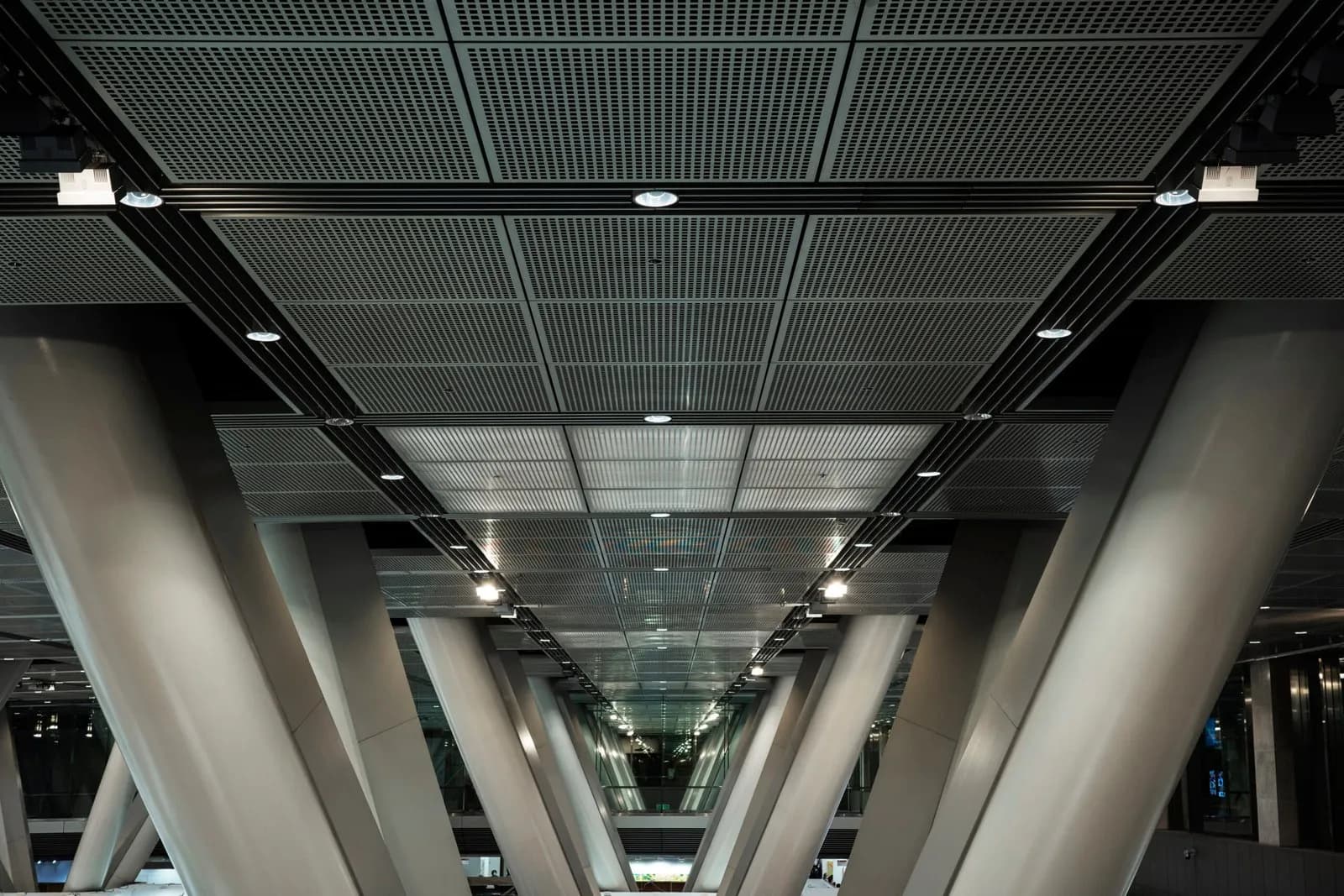
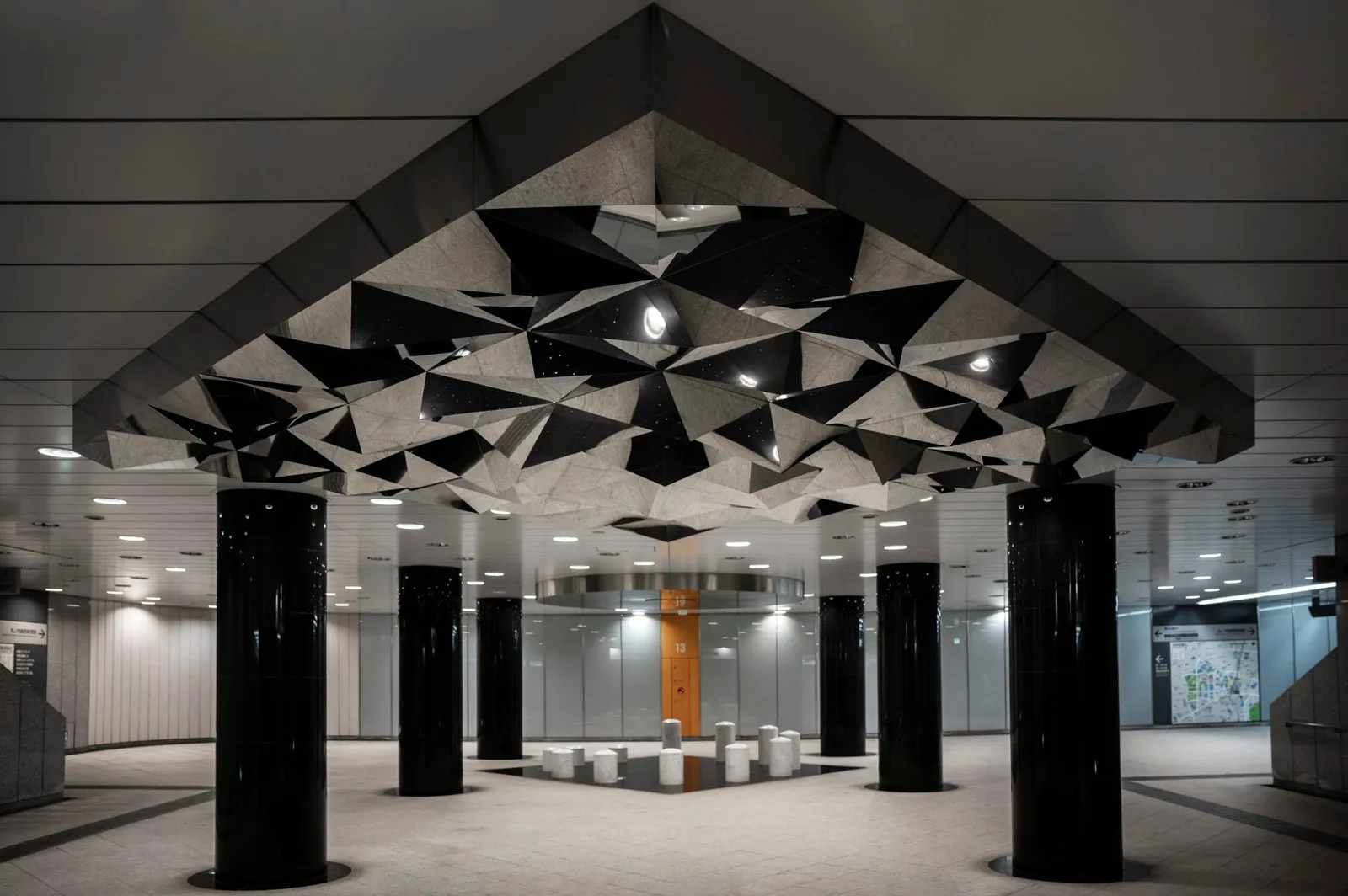
The standard residential downlight was 6 inches, then 4, and is now 3 inches on most of our schedules, with 1 inch fixtures and pinholes appearing wherever the ceiling is meant to stay unbroken: over a bed, in a formal dining room, along a corridor. Trimless installs, plastered in with no visible ring, have gone from a luxury detail to a common request. The consequence is that plaster and drywall trades now need the fixture on site before the skim coat, and the schedule has to say so.
2. Dim to warm has replaced the second circuit
The evening scene used to need a separate set of warmer fixtures or a lot of table lamps. A dim to warm engine, running 3000K at full and drifting to 1800K as it dims, gives the candlelit end of the range from the same downlights. It is now specified on the general layer of most living and dining rooms we draw, and on the bathroom for night use.
3. Control has gone wireless, and it is decided first
A scene system used to mean a control panel, a programmer and a rewire. Casambi and similar Bluetooth mesh systems put a node in each driver and the control on a phone or a wall keypad, with no central hardware. That has made scene control affordable on ordinary houses, and it has changed the order of specification: the protocol is chosen first, then the drivers, then the fixtures. TRIAC for a house keeping its wall dimmers, 0-10V or DALI-2 for a wired system, Casambi for wireless.
4. Magnetic track in the kitchen and the living room
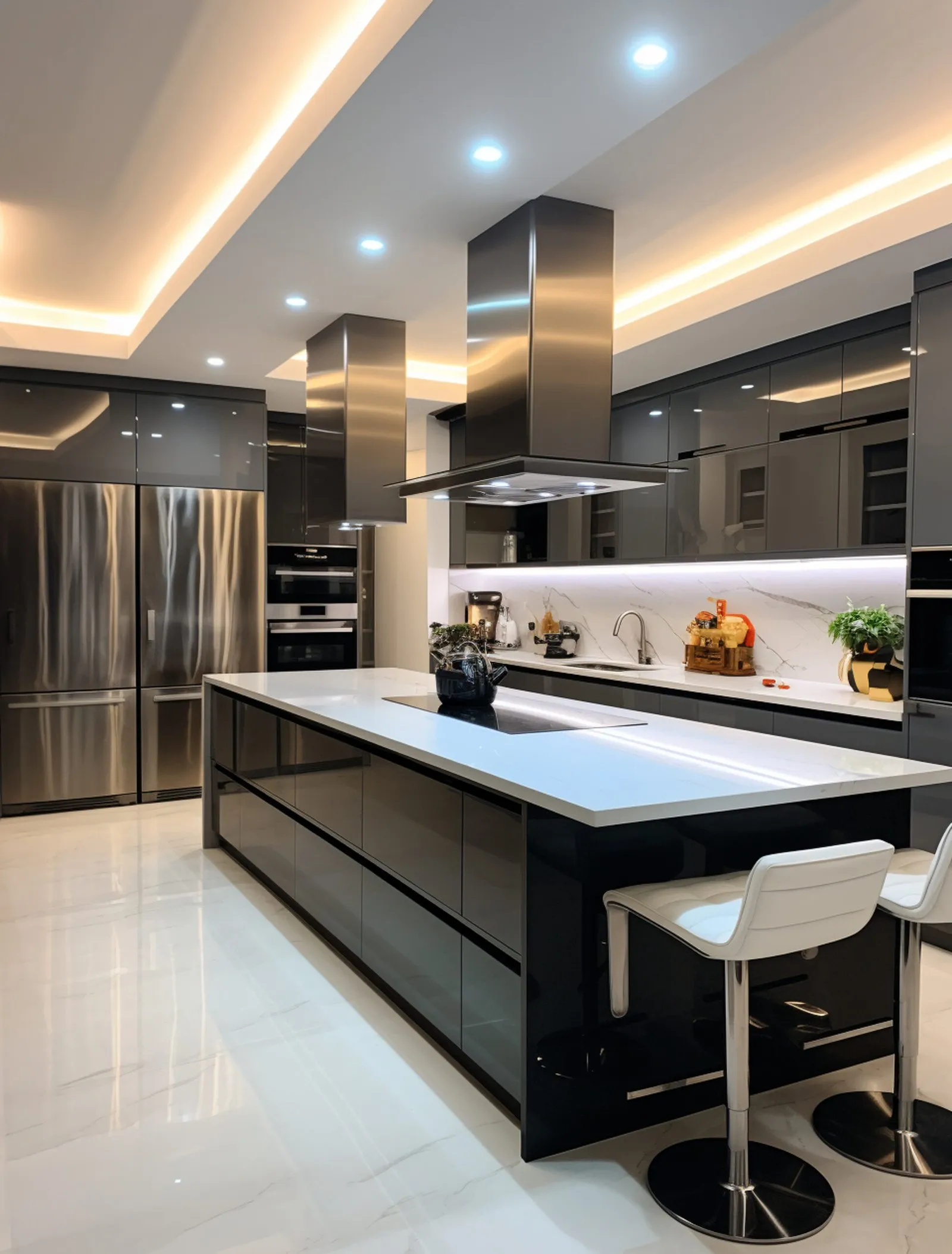
A 48 volt magnetic track was a retail and gallery product a few years ago. It is now the most common fixture over a kitchen island on our residential work, and increasingly the general layer in a living room, because the spots, linear modules and pendants on it can be moved by hand once the furniture is in. The slim 1 inch profile is what made it acceptable in a domestic ceiling; recessed, it reads as a single dark line.
5. Lighting that follows the day
Tunable white engines, 2700K to 6500K, on a schedule that runs cool in the morning and warm in the evening, were a wellness pitch and are becoming an ordinary specification in bedrooms, home offices and kitchens. The technology is simple; the discipline is in the programming. A tunable system left on one setting is an expensive static fixture. Specify it with the control that will actually drive it.
6. Light on the walls, not the floor
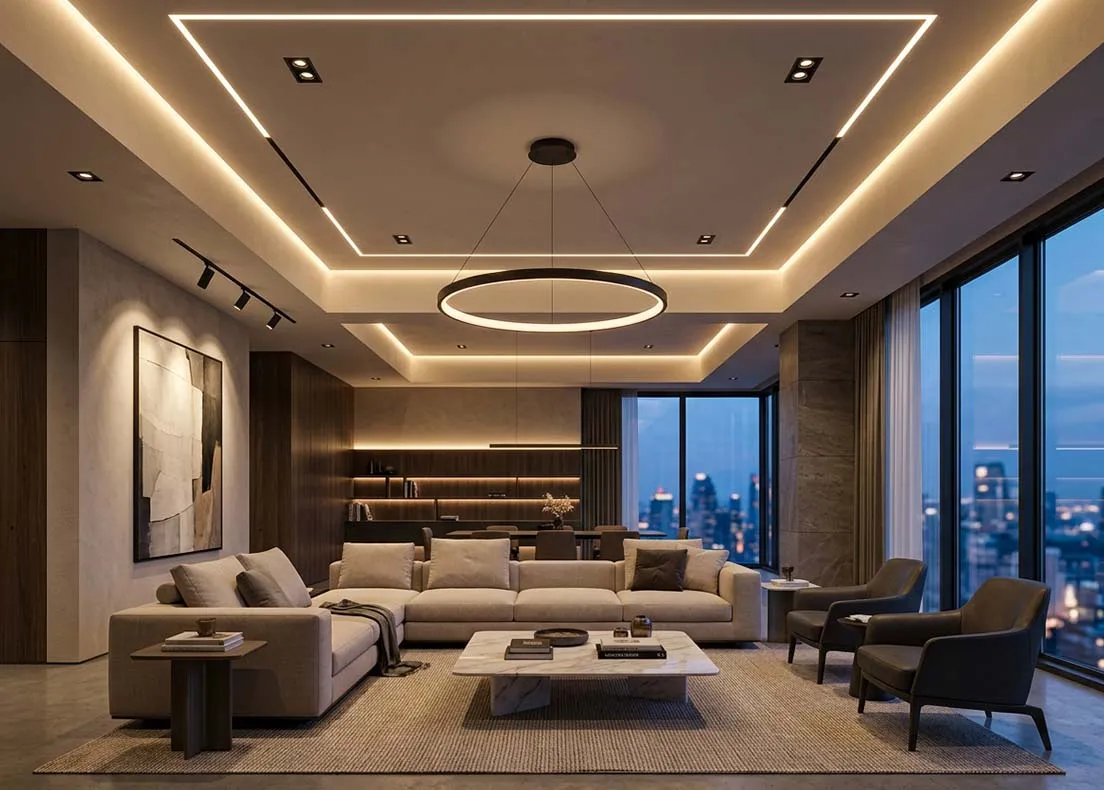
The grid of downlights centered on the room is finally going. In its place: fixtures around the perimeter, washing the walls, and the middle of the ceiling left empty. Rooms lit this way read larger and calmer at the same or lower lumens, because we judge brightness from vertical surfaces. Wall wash optics, once a commercial specialty, are now on residential schedules.
7. Linear light built into the joinery
LED strip in an aluminum profile, with a diffuser so it reads as a line rather than dots, has moved from under the kitchen cabinets to everywhere millwork is: the front edge of shelves, the underside of a floating vanity, a handrail, a headboard, a toe-kick. The rule that comes with it is one color temperature and one CRI standard for the strip and the downlights, since a mismatched cove is a large mismatch.
8. Decorative pieces, chosen as objects
After a decade of hiding everything, a single decorative fixture per room is back: a geometric pendant in brass or bronze over the table, a pair of sconces at the fireplace, an opal glass flush mount in the entry. The shift is that it is chosen as an object and lit around; the downlights or the track above it put the light on the table. Finishes on the architectural fixtures are following, with bronze and brushed nickel trims specified to sit with the brass.
9. Surface fixtures as a choice, not a compromise
Surface cylinders and surface track used to appear only where the ceiling could not be cut. They are now specified on purpose in loft and industrial interiors, on timber ceilings, and in rooms with exposed structure, in the same optics and finishes as the recessed family so the two read as one range. Suspended linear over a long dining table is the same idea.
10. Outside treated as part of the inside
At night a window is a mirror unless something beyond it is lit. Residential schedules now routinely carry a few exterior fixtures whose only job is to be seen from inside: an in-ground uplight on one tree, a wash on a courtyard wall, step lights on a terrace, at the same color temperature as the interior and on the same evening scene. The dark-sky rules in many municipalities have pushed the fixtures toward low output, warm color and full cut-off, which suits the effect.
What has stopped being a trend
High CRI is a baseline, not a feature: 90 minimum, 95 or better where there is timber, stone or fabric. Layered lighting with each layer on its own dimmer is the way every competent scheme is drawn. And LED is simply what a fixture is; nobody specifies it as a choice any more.
Applying them
- Choose the control protocol before the fixtures and write it on every driver line.
- Get the trimless fixtures to site before the plasterer.
- Specify dim to warm on the living and dining general layers.
- Draw the perimeter first and leave the center of the ceiling empty.
- Match the strip to the downlights on color temperature and CRI.
- Put the exterior accents on the interior evening scene.
Our range covers all ten, from the pinhole downlight to the in-ground uplight, on drivers for TRIAC, 0-10V, DALI-2 and Casambi, at up to 97 CRI. Send us the plans and we will draw the scheme to suit the ones that apply.
Planning a project? Our lighting design service turns plans into a photometric plan, fixture schedule, and final aim. Start with a design brief.