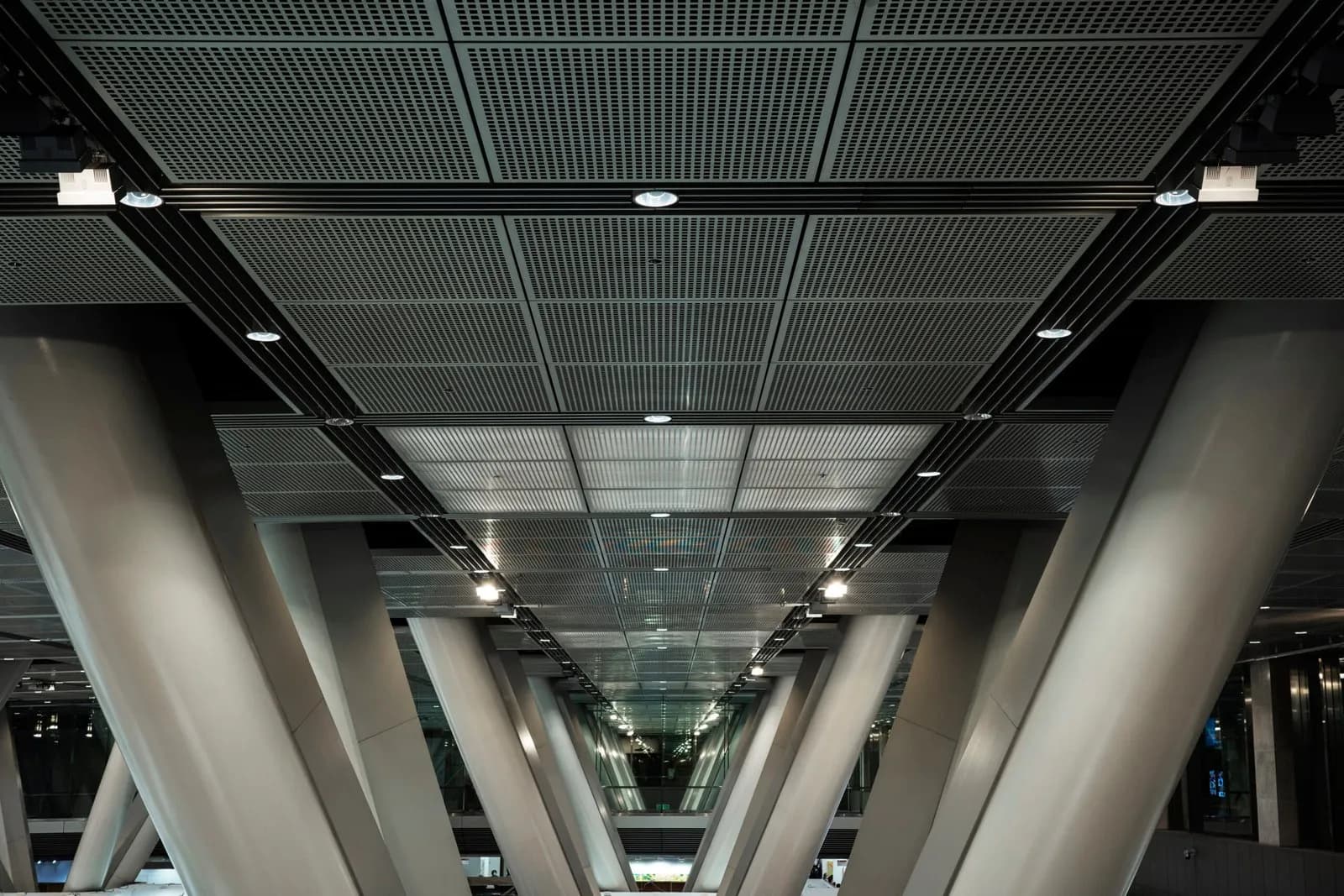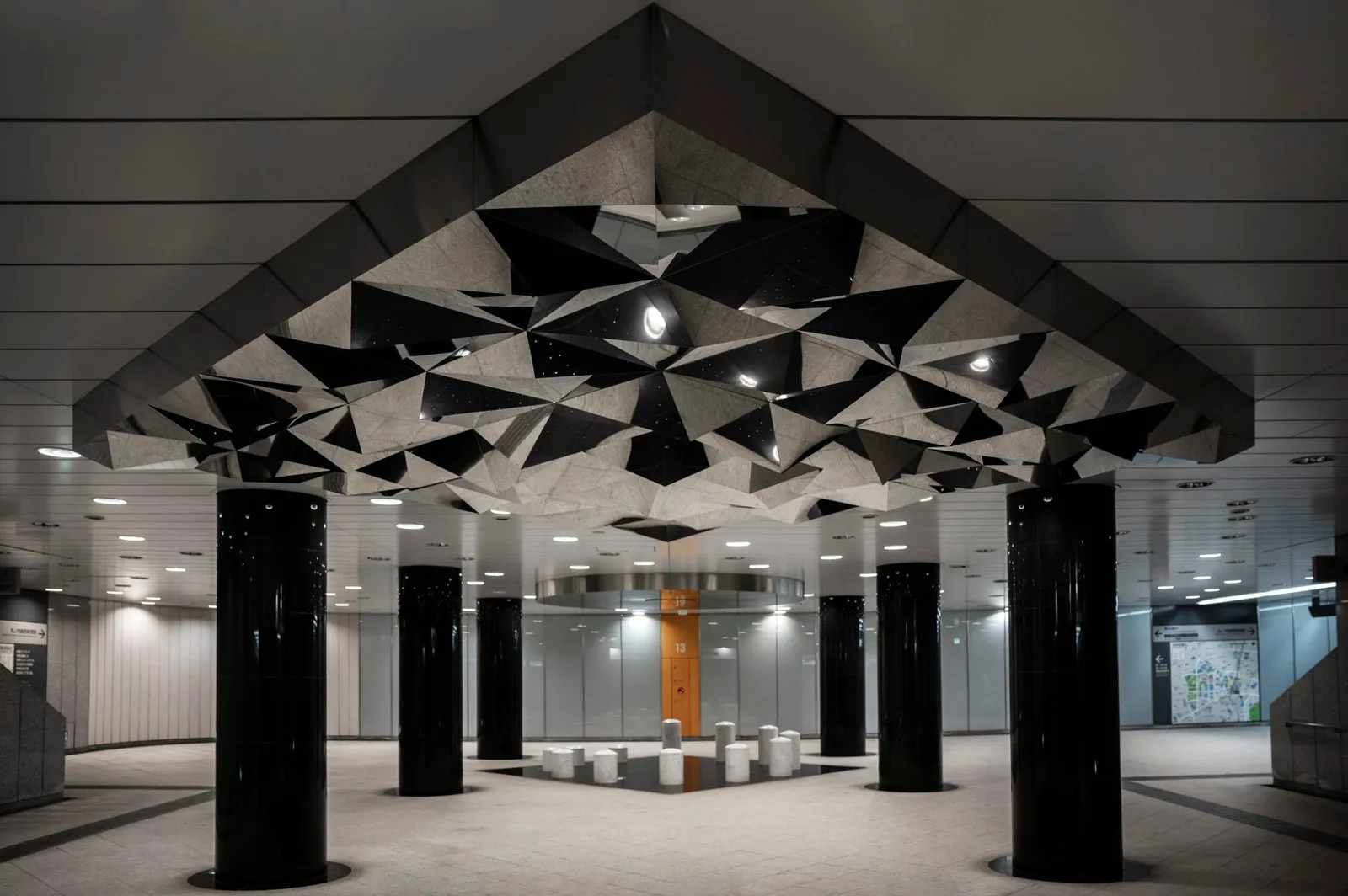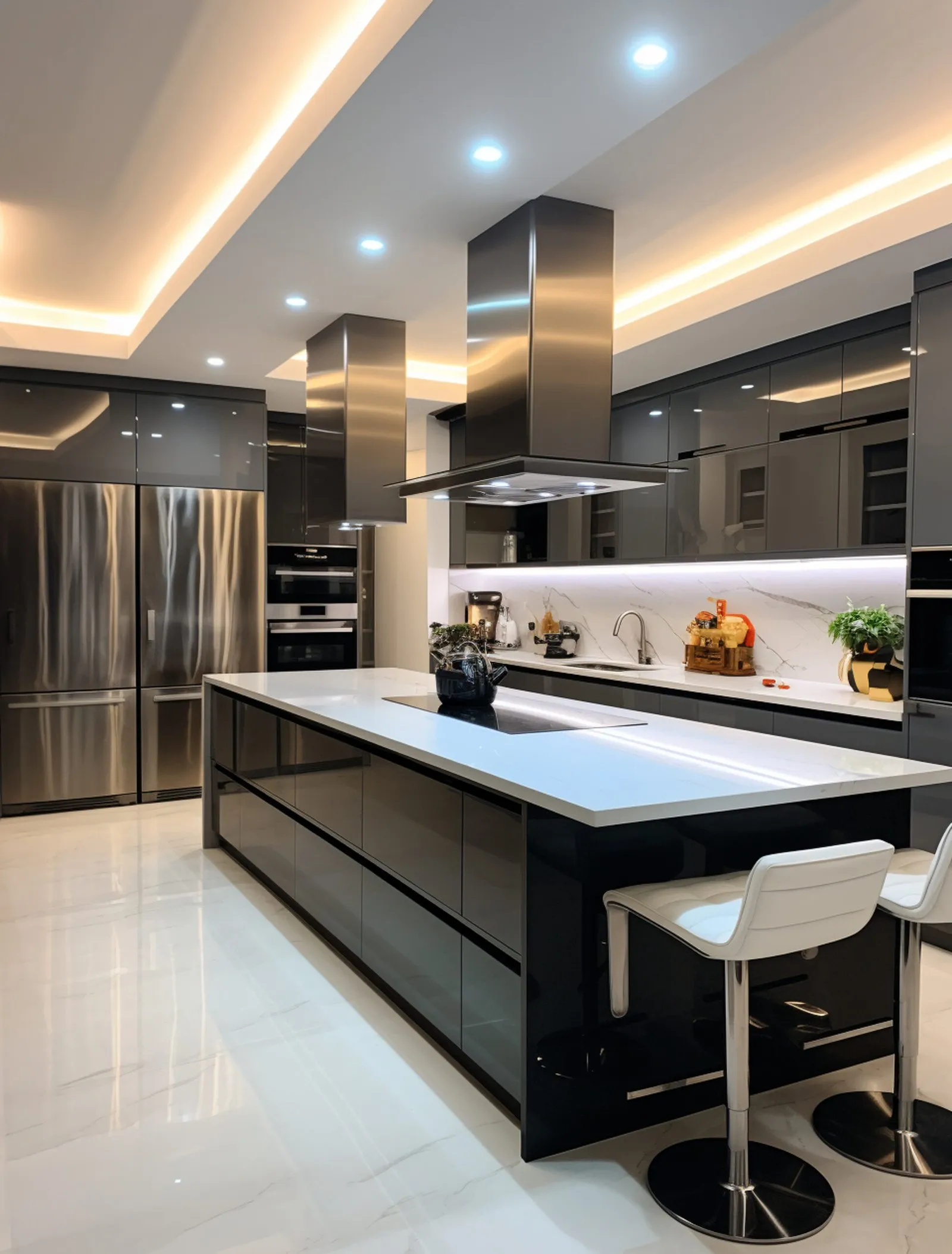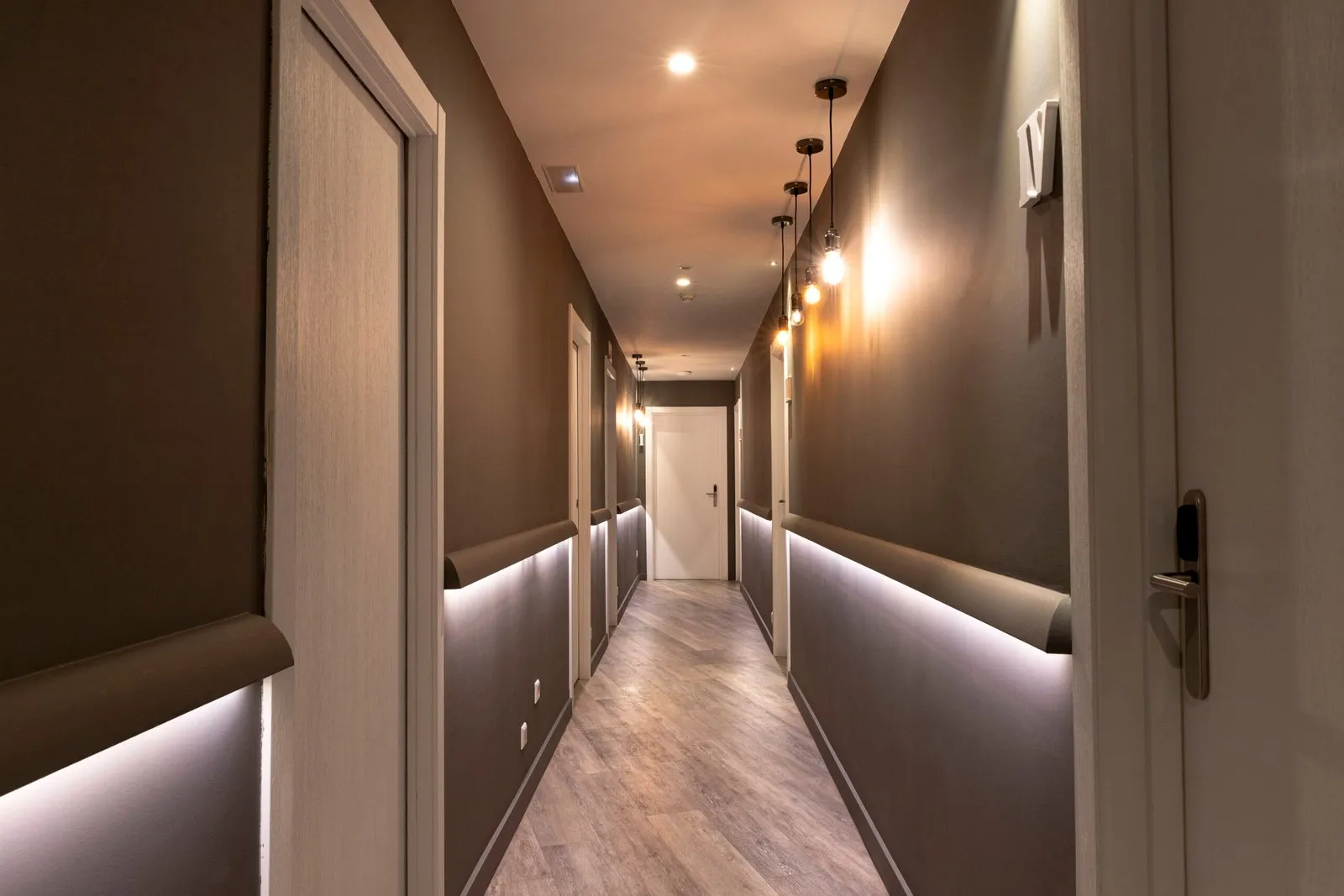
The rooms where lighting goes wrong are the rooms that change. A kitchen where the table moves, a living room rehung with new art, a shop whose displays turn over every season. Fixed downlights are aimed once, at whatever was there when the ceiling was closed. Magnetic track is the answer to that problem, and it has quietly become the most specified system in our residential work because it solves it without looking like a solution.
What it is, mechanically
A magnetic track is an aluminum channel carrying two low voltage conductors along its length. A remote driver converts mains to 48 volts DC and feeds the channel. Each light module has a magnet and a pair of spring contacts in its base; press it against the rail and it holds itself in place and lights up. There is no tool, no screw and no wiring at the fixture. Slide it a foot to the left and it stays lit the whole way.
Because the rail is at 48 volts it is safe to touch while live, which is what makes the whole system usable by people who are not electricians. The driver still connects to line voltage and is installed to code, usually in a ceiling void or a cupboard with access. Everything after the driver is class 2 low voltage.
Two profiles, three ways to mount
We make the rail in two profiles. Slim is a 1 inch channel that disappears into a residential ceiling and suits tight plaster details. Standard is 1.5 inches and takes larger optics and higher output modules, which makes it the choice for taller ceilings, retail and hospitality. The two profiles use different modules, so pick one per project and stay with it.
Each profile mounts three ways. Recessed sits flush with the ceiling plane and is the quietest result, but it has to be planned before drywall. Surface mount sits on the finished ceiling, which is the retrofit answer and the only answer on concrete. Suspended hangs the rail on wires below a high or exposed ceiling, bringing the light down closer to the work plane.
What goes on the rail
One run can carry every layer of a lighting scheme.
- Spots: aimable heads with a defined beam, narrow for an object and wider for a counter, for the island, the art, the shelf. The narrow beam is what a fixed downlight usually cannot give you.
- Linear modules: diffused sections in several lengths that put even light onto a counter or a floor without a visible source. Several in a line read as one continuous strip.
- Folding heads: a linear module hinged so it can be angled toward a wall, for washing a run of cabinets or a bookcase.
- Pendants: a drop on a cord from the same rail, over a table or an island, with the cord position moved as the table moves.
- Halo and decorative modules where the rail is meant to be seen.
Mixing them is the point. A kitchen run might carry two linear modules over the prep counter, three spots over the island and a pendant at the table end, all on one channel and one driver.
Sizing the driver and feeding the run
Add the wattage of every module you expect to put on the rail, then add headroom for the ones you will add later. Choose a driver rated above that total. A driver run at its limit runs hot and dims badly; a driver at 70 percent load lasts.
Long runs need attention to voltage drop. A 48 volt system fed from one end loses a little voltage along every foot of conductor, and on a long run the modules at the far end can start to dim visibly against the ones near the feed. The fixes are simple if planned: feed from the middle, feed from both ends, or split a long run into two sections on two drivers. Send us the run lengths and module counts and we will confirm the driver count and where the feed points go.
Dimming, and the decision to make early
There are two ways to dim a track, and they lead to different drivers. Dimming at the driver dims the whole run together, through TRIAC on a standard wall dimmer, 0-10V on a commercial system, or DALI-2 on a control system. Dimming per module puts a small controller in each head, so a spot on the art and a linear over the counter can be set separately; that route is usually Casambi over Bluetooth mesh or DALI-2 with addressed modules. Decide which you want before the driver is ordered, because it is not a change you can make later without replacing it.
Why it suits modern interiors specifically
The first reason is the ceiling. A recessed track is one clean line, and a room lit from it has one line in the ceiling instead of a scatter of separate apertures. Run it parallel to the main wall, at the counter edge rather than the room center, and it reads as a detail of the architecture. In Scandinavian and Japandi interiors with plain plaster ceilings, that single line is often the only thing in the ceiling at all.
The second reason is that these interiors put their effort into surfaces, timber, stone and plaster, which want light across them rather than on the floor. Spots and folding heads on a track do that from a position that can be corrected after the furniture arrives, and a fixed layout cannot.
The third is honesty about how rooms are used. Open plan living changes month to month. A track lets the lighting follow it without a callback.
Where we would not use it
A wet room, since the standard modules are not sealed; use our IP65 downlights there. A long corridor that only needs even light, where a run of fixed downlights or a recessed linear is simpler and cheaper. And any room where the client wants nothing at all visible in the ceiling, since even a recessed track is a visible line. A pinhole downlight is the answer to that brief.
A note on efficiency
Every module on the rail is LED, and a run of five spots and two linears typically draws less than a single old halogen downlight. The 48 volt architecture also lets one driver serve a whole room, which is one power supply to maintain instead of one per fixture. Five year warranty on every part of it, like the rest of our range.
We stock the core track components at our facility in West Palm Beach: profiles, drivers, spots, linear modules, connectors and end caps. Custom lengths and special finishes are made to order. Send us the plan with the run marked and we will return the channel layout, the head positions and the driver sizing.
Planning a project? Our lighting design service turns plans into a photometric plan, fixture schedule, and final aim. Start with a design brief.