Trend pieces about lighting tend to describe what showrooms are displaying. What follows is what has changed on the fixture schedules crossing our desk, which is a slower and more reliable signal. Three shifts stand out for 2026, and each one has a practical consequence for how a project gets specified.
1. Control has become the specification
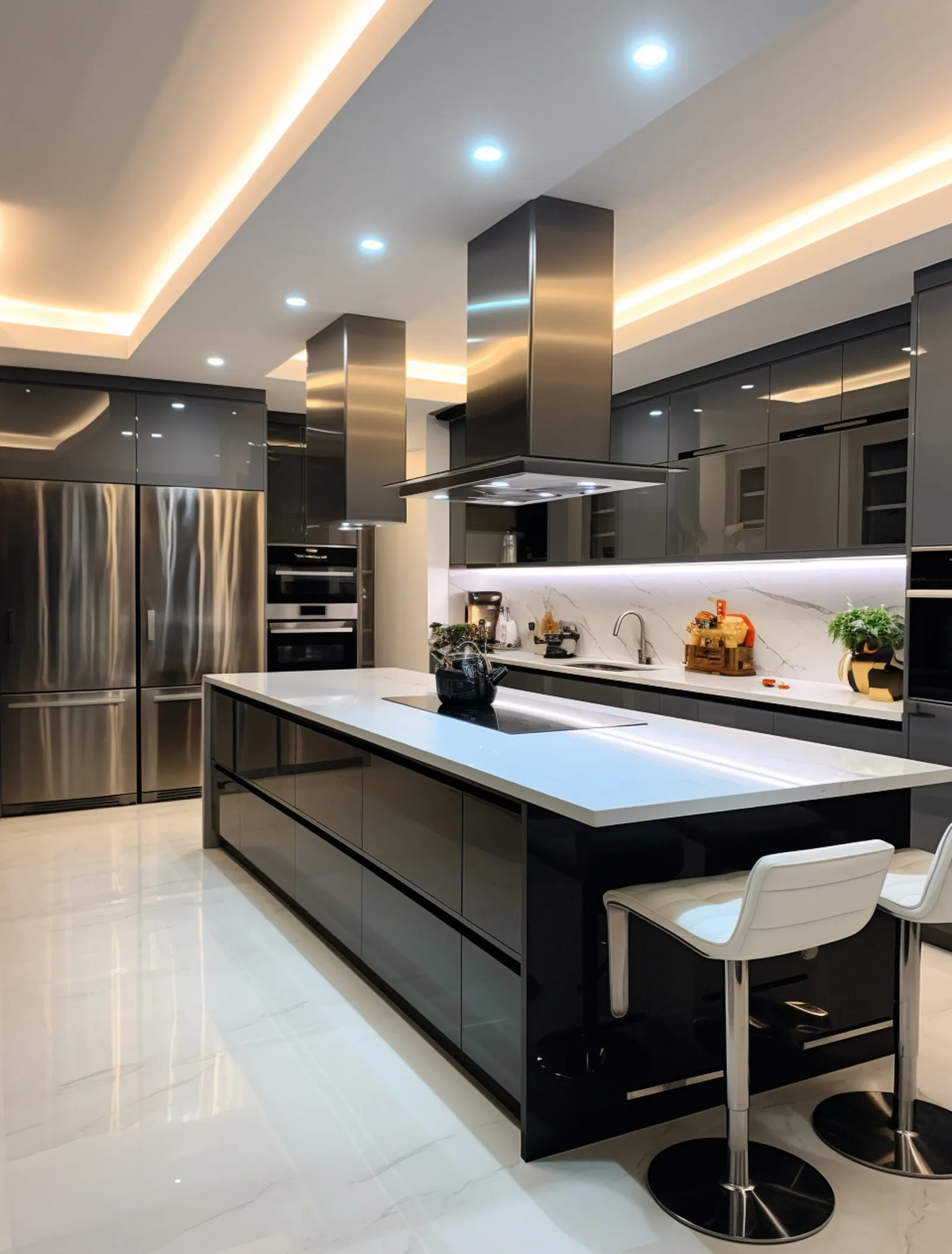
Five years ago a residential schedule listed fixtures and, at the bottom, a dimmer. Now the control system is decided first and the fixtures are chosen to suit it. The shift is driven by two things. Wireless protocols, Casambi in particular, have made scene control possible without a control panel, a programmer or a rewire; a driver with a Casambi node talks to the phone and to every other node in the house over Bluetooth mesh. And tunable engines have given the control system something worth controlling: a 2700K to 6500K range, or a dim to warm curve from 3000K down to 1800K, that changes through the day.
The practical consequence is that the driver has to be specified with the fixture, and the protocol before either. TRIAC for a house that will keep its wall dimmers, 0-10V or DALI-2 for a wired control system, Casambi for a wireless one. Getting this wrong is the commonest reason a good scheme flickers.
Smart lighting in the sense of a bulb with an app has largely gone from professional specifications. The bulb is not the unit any more; the driver and the zone are.
2. Decorative fixtures are back, and they are geometric
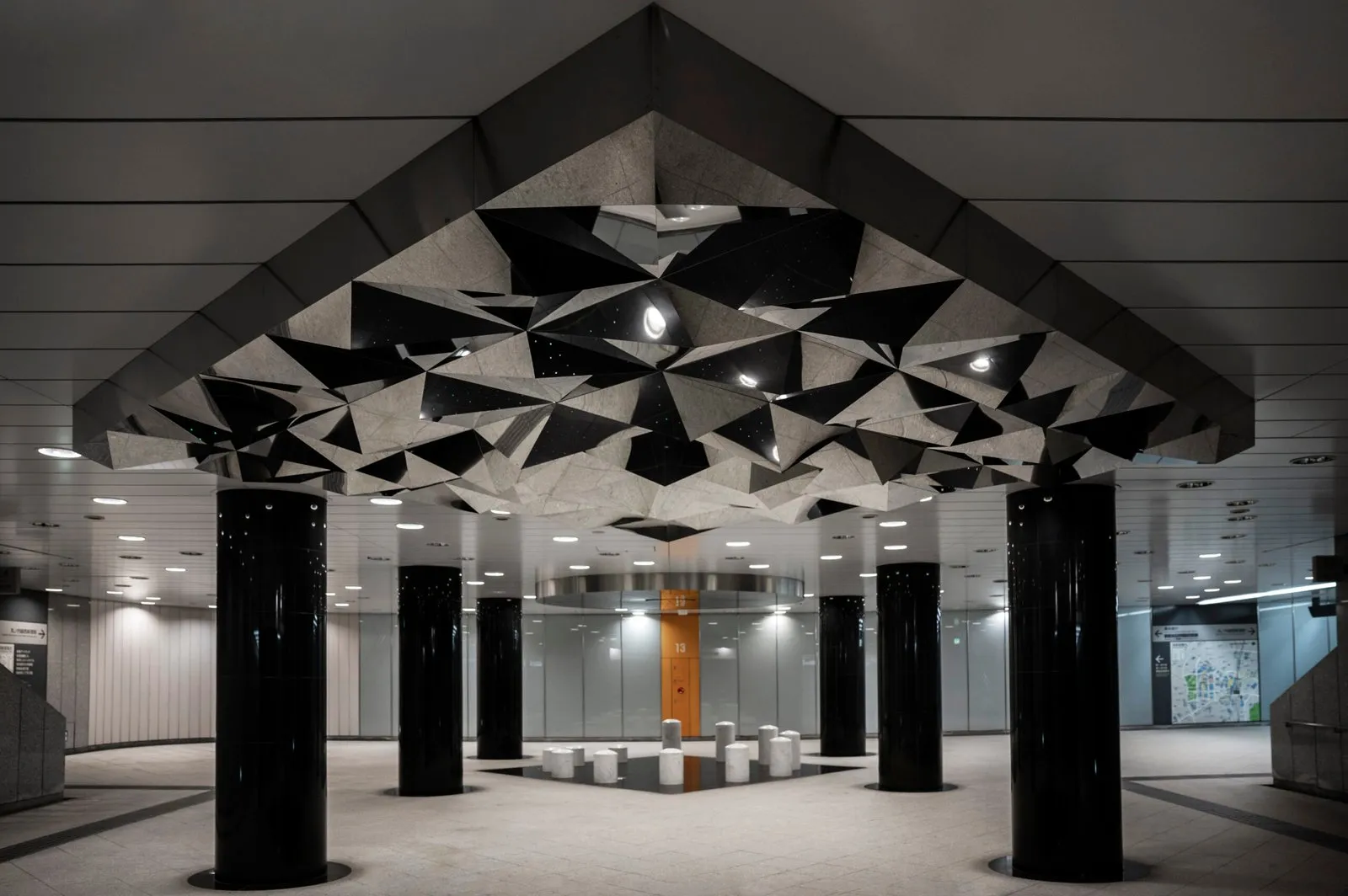
After a decade in which the ambition was for nothing to be visible in the ceiling, decorative fixtures have returned to residential schedules. What has come back is not the ornate chandelier but something closer to Art Deco: strong geometry, brass and bronze, opal glass, symmetrical forms with a bit of weight to them. A single pendant over a dining table or a pair of sconces flanking a fireplace, chosen as an object, against a background of architectural lighting that does the real work.
The consequence is a division of labor that needs to be explicit on the drawing. The pendant is lit for its own sake and puts little light on the table; the downlights or the track above it put the light on the table. Specifying the decorative piece and forgetting the working layer behind it is the mistake we see most often when this trend is applied.
The finishes have followed. Black trims remain the default for architectural fixtures, but bronze and brushed nickel are being chosen where the decorative pieces are brass, so the small apertures in the ceiling read as part of one palette.
3. Small fixtures treated as objects
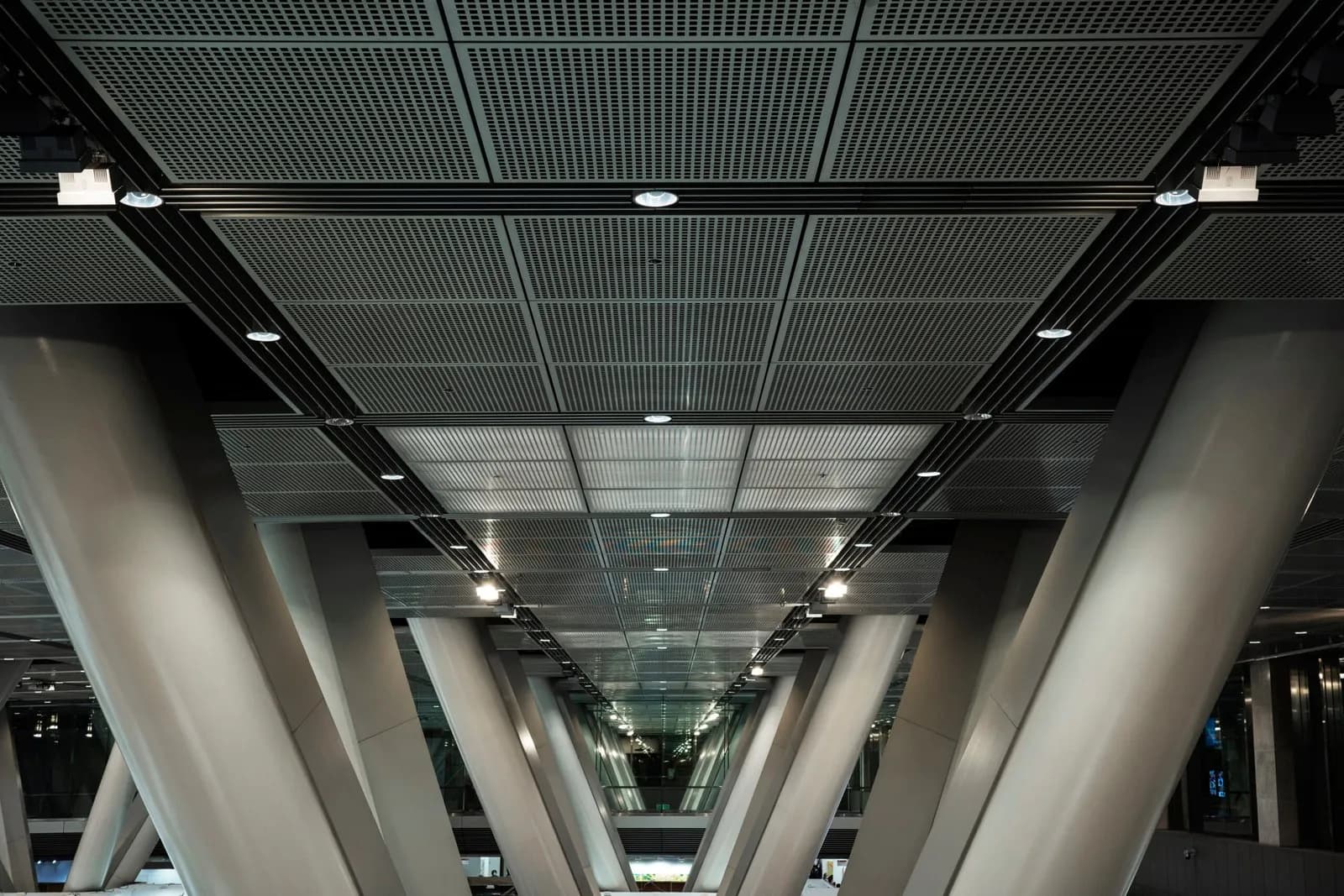
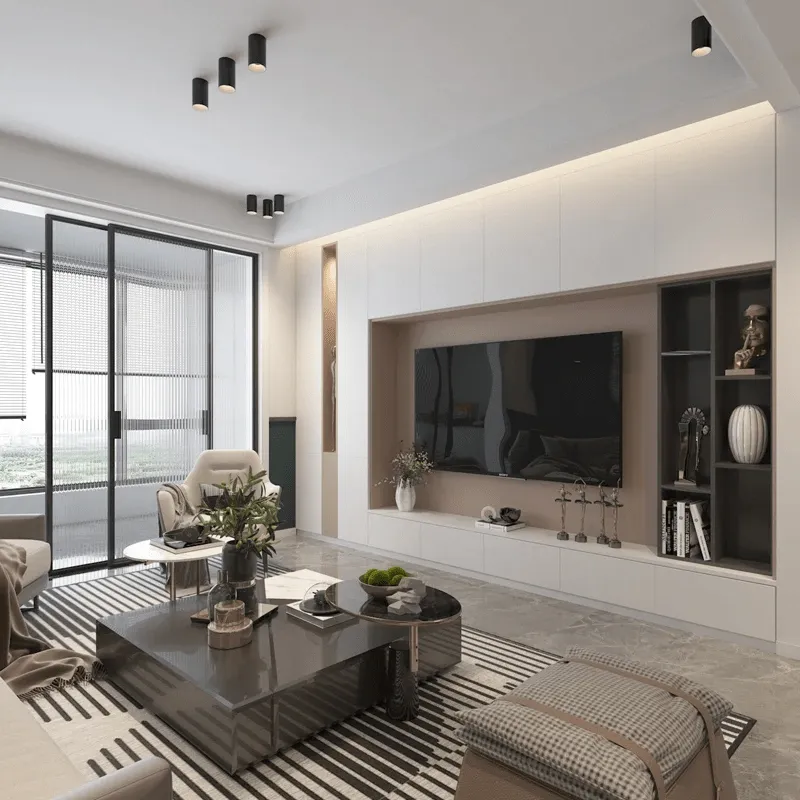
The third shift is subtler. Downlights and spots used to be chosen from a catalog by lumen output and price. Increasingly they are chosen the way a door handle is: as a small, repeated object whose form matters because there are forty of them. Trimless apertures plastered into the ceiling, square or round to suit the room's geometry, black reflectors so the aperture reads as a dark dot, a pinhole where even a 1 inch hole is too much. And in retail and hospitality, the opposite move, a surface cylinder or a suspended track chosen because its form is right for the room.
The consequence is that the sample matters. A 3 inch trimless aperture in a plastered ceiling and the same fixture with a micro-flange in drywall are different objects, and the decision is best made with one of each held up to the ceiling.
Two things that are not trends
High CRI is no longer a trend; it is a baseline. Anything under 90 is now a compromise, and 95 or better is expected wherever there is timber, stone or fabric. Similarly, layered lighting, the division of a scheme into general, task and accent, has stopped being advice and become the way every competent scheme is drawn. If a 2026 schedule has one circuit per room, it is not a 2026 schedule.
Applying the three to a project
- Decide the control protocol first and write it on every driver line of the schedule.
- Where a decorative fixture is chosen, add the working layer that lights the surface below it.
- Sample the aperture and trim in the actual ceiling before the order goes in.
Our range covers each of these: drivers in TRIAC, 0-10V, DALI-2 and Casambi, trims in trimless, micro-flange and millwork, finishes from white through black to bronze and nickel, and a lighting design service that draws the working layer under whatever decorative piece the project has chosen.
Planning a project? Our lighting design service turns plans into a photometric plan, fixture schedule, and final aim. Start with a design brief.