Most of what is wrong with the lighting in an existing house can be fixed without a renovation. The ceilings stay closed, the plaster stays intact, and the electrician is there for a day or two rather than a month. The trick is knowing which changes are cheap because they use what is already there, and which ones are not. Here is how we approach a house that needs better light and cannot be torn apart to get it.
Start with what the ceiling already has
Walk the house and list every existing fixture: the recessed cans and their size, the boxes for surface fixtures, the switches and which fixtures they control, and whether any dimmers exist. This inventory is the budget. Every existing can is a cable and a hole you do not have to pay for. Every existing box is a mounting point. The upgrade should use as many of them as possible and add new holes only where the plan really needs them.
Then measure. A light meter after dark at the counter, the mirror, the reading chair and the desk tells you which rooms have a task light problem and which have a mood problem, and those are fixed differently.
Existing recessed cans: the cheapest win
A house of a certain age has 4 or 6 inch cans with halogen or early LED lamps in them. Those housings are wired, switched and, if the house was built to code, appropriately rated for the insulation around them. The question is what to put in the hole.
The option with the smallest visible change is a retrofit engine sized to the existing can, which drops the 6 inch aperture to a smaller trim with a proper reflector and a modern chip. The option with the best result is a smaller architectural fixture, our 3 inch downlight for instance, set in a new housing that uses the existing cable position; the old hole is patched to the smaller cutout, which in drywall is a small job. Either way the light quality changes completely: a deep regress so the source is out of view, 97 CRI so the room's colors come back, and a beam chosen for the job rather than whatever the lamp gave.
The one thing to check before ordering anything is the insulation. If the old cans are not IC rated and there is insulation against them, the replacement must be IC rated or the insulation held clear, and the electrician should confirm that on the first visit.
Where there are no cans: surface track
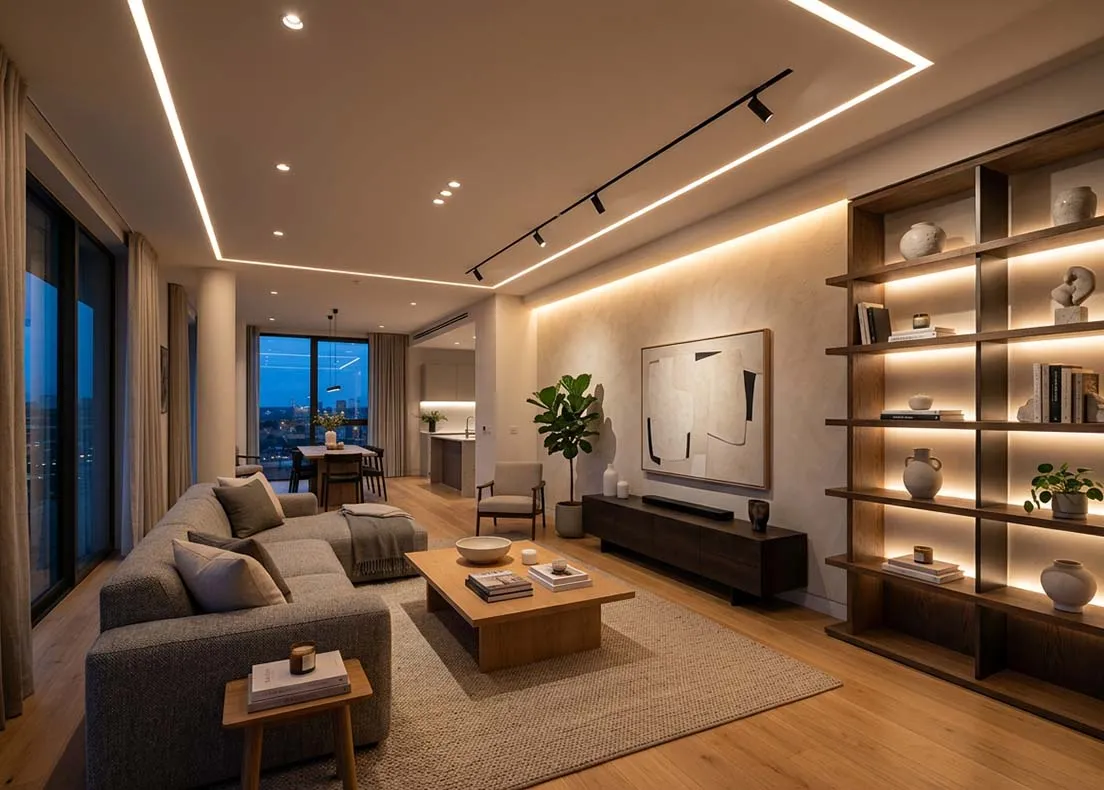
A living room with one center fixture and a kitchen with a single flush mount over the island are the usual finds. The center box has a cable, and a surface mounted magnetic track can run from it. One channel on the finished ceiling, fed from the existing box, carries spots for the art, linear modules for general light and a pendant over the table, all on a 48 volt rail that the household can rearrange by hand afterward. It is the single most effective retrofit we know, and it needs no new cable and no cutting.
Surface cylinders do the same job point by point: a fixed or adjustable cylinder on an existing box, with the same optics and finishes as the recessed family, so a house can mix surface fixtures in the rooms that cannot be cut with recessed ones in the rooms that can.
Strip in the joinery
The task lighting most houses lack, under the kitchen cabinets, along the shelves, under a floating vanity, is low voltage LED strip in an aluminum profile with a diffuser. It runs from a small driver in a cabinet, fed from an outlet or a nearby switched circuit, and the wiring stays inside the joinery. Mount the profile at the front edge of the cabinet underside, aimed down, on its own dimmer, at the same color temperature as the room's other fixtures. This is a half day for a competent installer and it changes how a kitchen works.
Dimming: the part that usually goes wrong
Older dimmers were made for incandescent loads and misbehave with LED drivers: flicker, buzz, a low end that cuts out at 30 percent. The retrofit answer is TRIAC. A TRIAC driver, also called phase cut or mains dimming, works behind a standard LED-rated wall dimmer on the existing switch wiring, with no low voltage control cable. That is what keeps a lighting upgrade from becoming a rewire. Replace the old dimmers with LED-rated ones, specify TRIAC drivers on the fixtures, and confirm the dimmer's minimum load against the fixture count on the circuit, since a single 15 watt fixture on a dimmer expecting 40 watts will flicker.
Where the household wants scenes without new cable, Casambi puts a wireless node in each driver and the control on a phone or a keypad, and it works alongside the existing switches. It is the way to get scene control into a finished house.
Color, applied consistently
A retrofit done room by room is where mixed color temperatures come from. Decide one for the house, 2700K or 3000K, before the first fixture is ordered, and apply it to everything including the strip and the lamps in the pendants. Specify 90 CRI as the floor and 95 or better in the rooms with timber, stone or fabric, and a dim to warm engine on the living and dining general layer so the evening scene goes amber without a second set of fixtures.
What still needs the electrician
- Any new circuit, and any new cable run through a ceiling or wall
- Replacing recessed housings, and confirming the IC rating against the insulation
- Line voltage connections to drivers, including the driver for a surface track
- Replacing dimmers and switches
- Anything requiring a permit in your jurisdiction, which in most places is all of the above
Swapping a lamp, clipping a module onto a live 48 volt track, and plugging in a strip driver are not on the list.
A retrofit in the right order
- Inventory the existing cans, boxes and switches, and measure the rooms at night.
- Decide the house's color temperature and CRI standard.
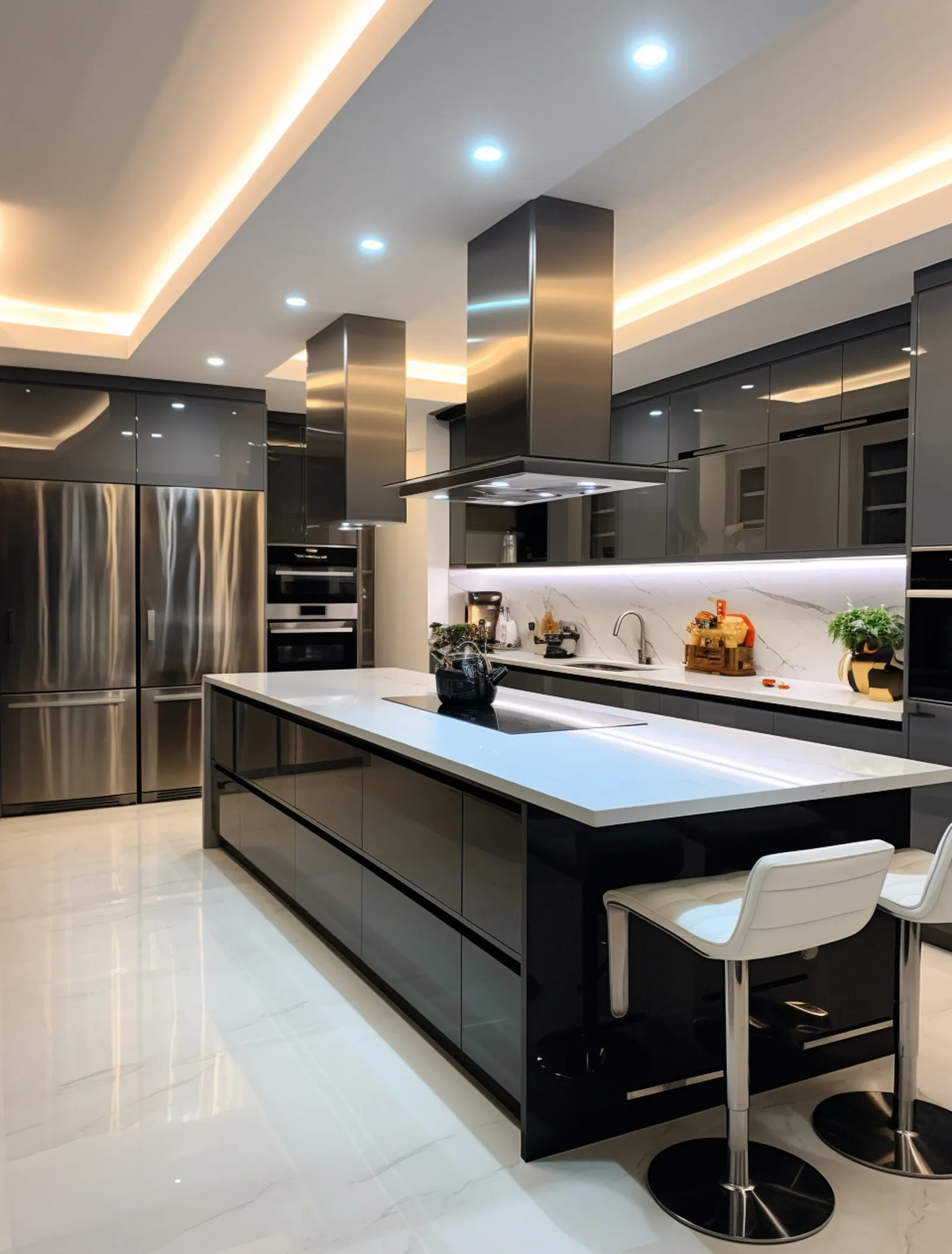
- Kitchen first: engines in the existing cans over the counter, strip under the cabinets, track or cylinders over the island from the existing box.
- Living room: track or cylinders from the center box, aimed at the art and the seating, on a dim to warm engine.
- Bathrooms: IP44 engines in the existing cans, light at the mirror.
- Replace every dimmer on the way with an LED-rated one, and specify TRIAC drivers throughout.
Our recessed downlights, surface cylinders and magnetic track share the same engines and finishes, so a house upgraded this way reads as one system rather than a collection of fixes. They are ETL listed, available in IC rated housings, with TRIAC, 0-10V, DALI-2 and Casambi drivers. Send us the fixture inventory and a plan and we will say which rooms can be done from the existing holes and which need one new one.
Planning a project? Our lighting design service turns plans into a photometric plan, fixture schedule, and final aim. Start with a design brief.